Most people find out about pool paperwork when the agent asks for the pool certificate a week before the listing goes live. By then, a fence that needs work is a fence that holds up the sale. Sorting it out a few months earlier is cheaper and calmer, and it leaves you a real choice between fixing the barrier and selling on a non-compliance certificate.
The rules below come from the NSW Government’s “Pool owner obligations” guidance (nsw.gov.au, checked October 2026). Your conveyancer or solicitor handles the contract itself, and your council or a private certifier handles the inspection.
What a sale contract needs
Every pool and spa in NSW has to be on the NSW Swimming Pool Register. When you sell, the contract must include the registration certificate plus one of three documents. That can be an occupation certificate issued within the last 3 years, a valid certificate of compliance, or a certificate of non-compliance.
Registration and certificates
- Register
- Every pool and spa on the NSW Swimming Pool Register
- Selling
- Certificate of compliance, a recent occupation certificate, or a non-compliance certificate
- Leasing
- Certificate of compliance or occupation certificate
- Certificate lasts
- 3 years
- CPR sign
- Near the pool, readable from 3 m
Source · NSW Government, Pool owner obligations
An occupation certificate only helps if the pool is recent. For most established Sydney homes the real choice is between a certificate of compliance and a certificate of non-compliance, and both start with an inspection.
If the contract goes out without the required pool documents, the buyer can rescind within 14 days of exchange, unless the sale has already settled. Few sellers want that hanging over a deal.
Selling with a non-compliance certificate
You can sell a property whose barrier fails. The contract includes the certificate of non-compliance, which lists the defects, and the buyer then has 90 days from settlement to fix them and get a certificate of compliance.
That moves the work to the buyer, and buyers know it. A defect list attached to the contract invites a conversation about price, and buyers tend to assume the repairs cost more than they do. If the defects are small, such as a gate that won’t latch or a planter in the climbable zone, fixing them and getting a certificate of compliance is usually the simpler path. If the whole fence is old and failing, it becomes a fair question whether to replace it yourself or leave it to the buyer.
Leasing has no fallback
Landlords have less room. The tenant must be given a certificate of compliance or an occupation certificate, and a certificate of non-compliance cannot be used to rent a property. A barrier that fails has to be fixed before the lease starts.
A certificate of compliance is valid for 3 years, which is often shorter than the gap between rental reviews and tenancies. Keep the expiry date with the smoke alarm and lease renewal dates, so a new tenancy doesn’t start on an expired certificate.
Why replacing the fence changes the rules
The standard your barrier is assessed against depends on when the pool was built. AS 1926-1986 may apply to pools built before 30 August 2008, AS 1926.1-2007 to pools built from 1 September 2008 to 30 April 2013, and AS 1926.1-2012 to pools built after 1 May 2013.
What matters for sellers is what happens when the barrier changes. If a barrier is modified or altered, AS 1926.1-2012 applies and any previous exemption ends. An older pool that passed under an exemption can’t keep it once you replace part of the fence. A new glass fence before a sale should be built to the current standard from the outset, and a partial repair can bring the whole barrier into question, so talk to your certifier before you change any section.
Does a glass fence add value
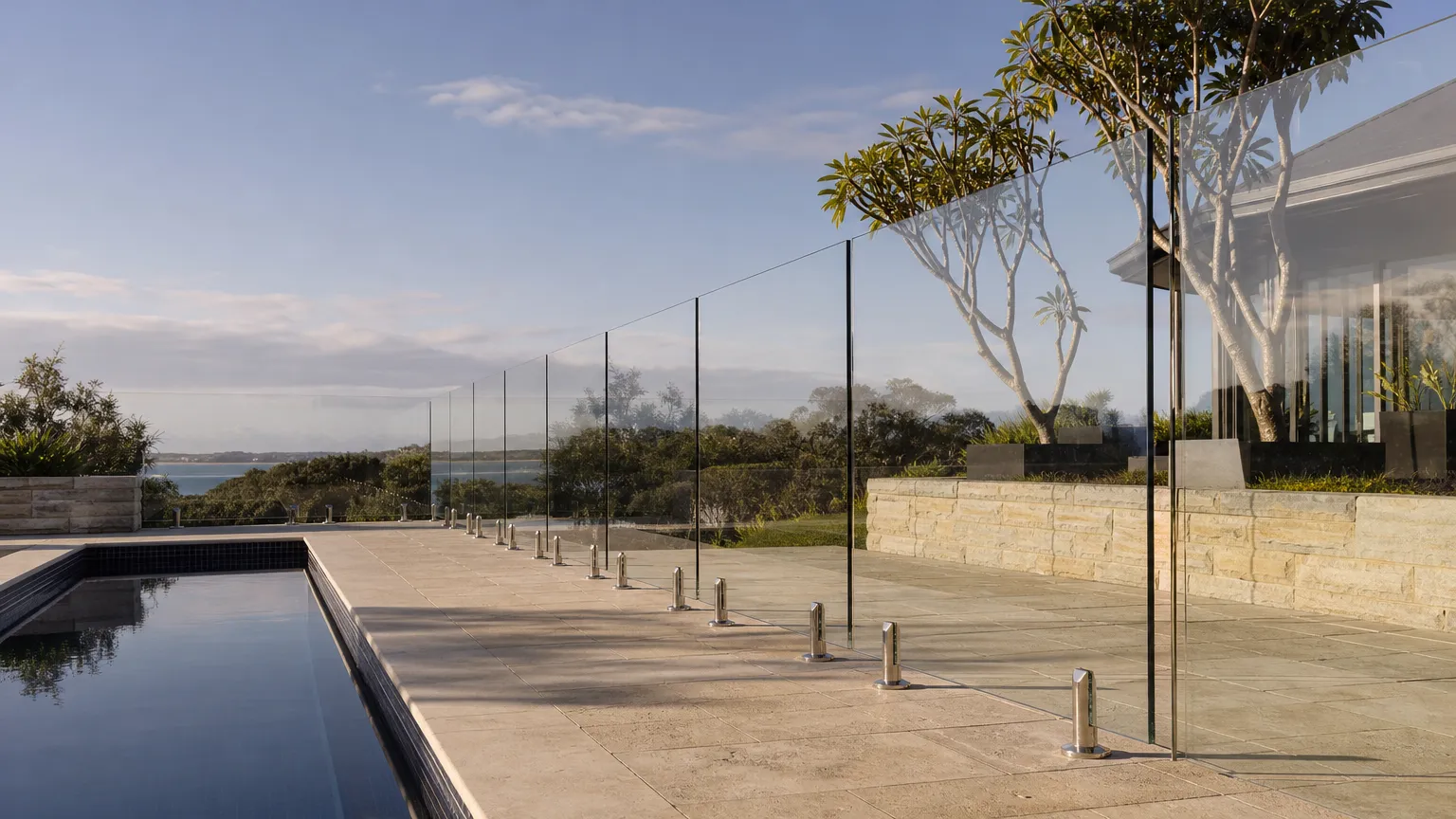
There’s no reliable figure for how much a glass pool fence adds to a sale price, and we’d be wary of anyone who gives you a percentage. What a compliant fence does is remove a problem. The contract goes out with a certificate of compliance, the buyer has no repair list to negotiate over, and the pool photographs well because the water is visible from the house.
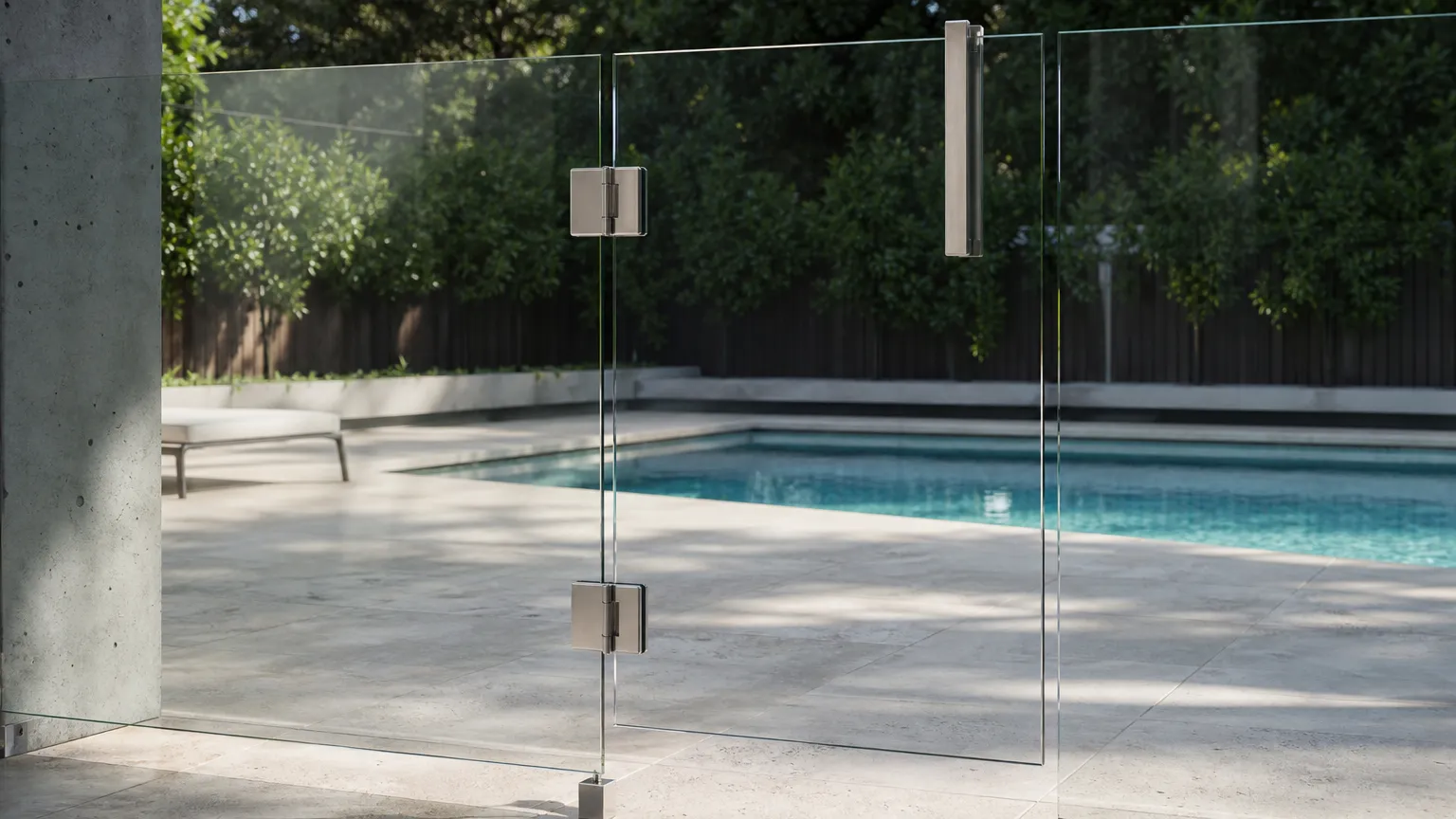
Glass also makes the inspection simple. There are no rails to measure between and no bar gaps to count, so the certifier is looking at the height, the gap under the panels, the gate and the zone around the fence. Buyers at an open home notice the same things.
What the options cost
Published guides give a feel for the numbers, and Sydney sits near the top of them. Service.com.au’s cost guide (updated 14 April 2026) puts frameless glass at $430 to $600 a metre installed, semi-frameless at $300 to $430 a metre, and glass gates at $400 to $900. Yakka Labour’s guide (1 October 2026, incl. GST) runs a little wider, at $400 to $700 a metre for frameless on core-drilled spigots and $280 to $450 for semi-frameless with aluminium posts.
Against that, clearing a defect list can be cheap. A new pool-rated latch, a hinge adjustment or a garden bed moved back from the fence often deals with it. Get the inspection done first, then price what’s actually on the list.
A sensible order
Check the register entry and find any existing certificate. If you don’t hold a current certificate of compliance, book an inspection with your council or an accredited private certifier well before the listing date. Fix what’s on the defect list, or decide to sell with a certificate of non-compliance and price that in. If the fence needs replacing, have it done and re-inspected before the contract is drawn up.
If the barrier needs replacing or altering before a sale or lease, our glass pool fencing page covers the systems, and you can send us the details for a free quote.