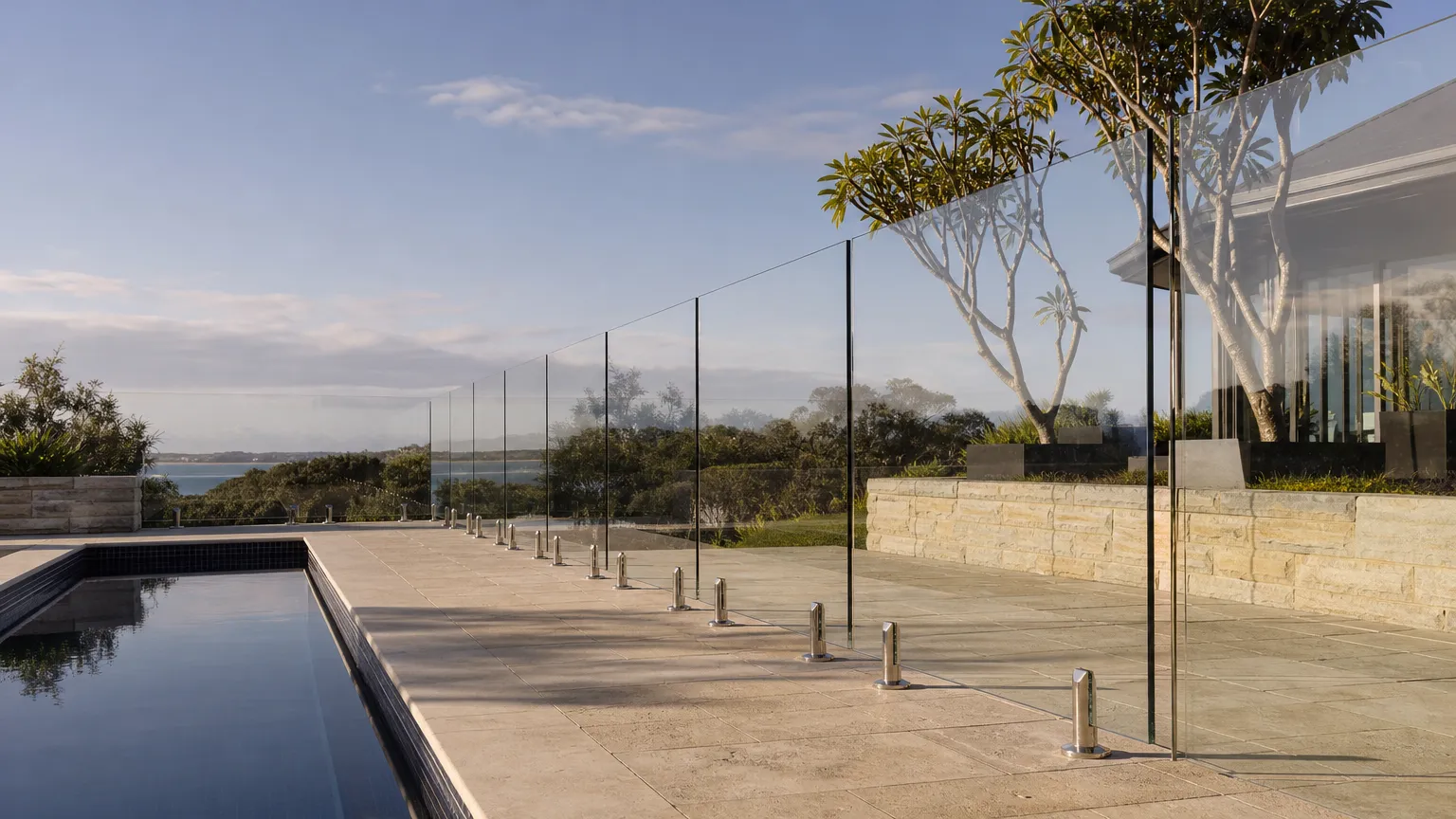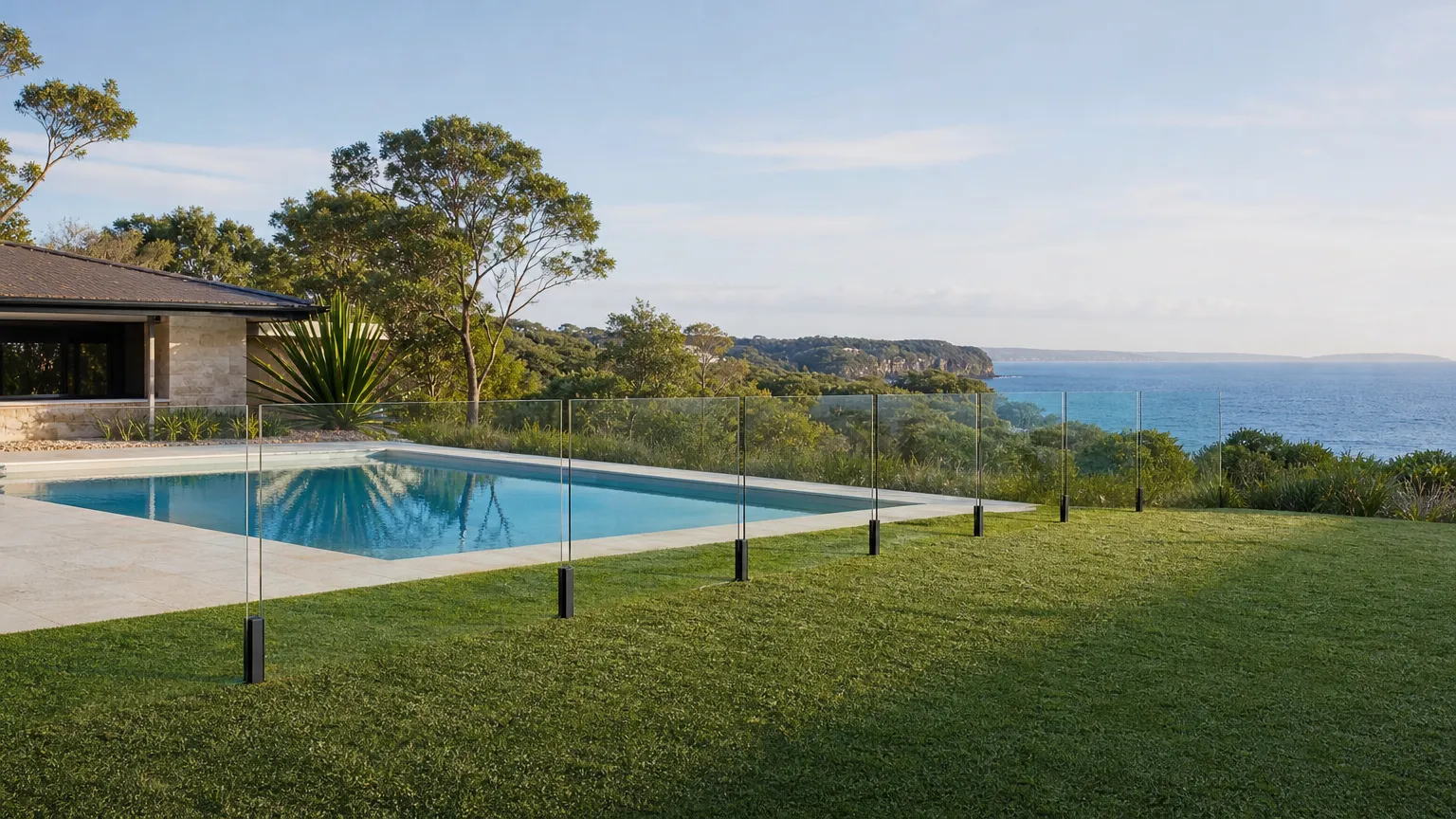
Stand at the kitchen sink and look out at the pool. With glass, you see the water. With aluminium tubular, you see it through bars, and with mesh through a fine screen. With a Colorbond boundary fence, you see the fence. That’s the biggest practical difference between the four common pool barriers, and it helps to decide how much it matters to you before comparing prices.
All four can be compliant. NSW sets the same rules for every material (NSW Government, “Pool owner obligations”, checked October 2026), so the choice is about how each type meets them and how easily it keeps meeting them.
NSW pool barrier
- Minimum height
- 1200 mm from finished ground level
- Gap under the barrier
- 100 mm or less
- Gaps between uprights
- 100 mm or less
- Non-climbable zone
- 900 mm arc outside, plus 300 mm inside
- Boundary fence as barrier
- 1800 mm high
- Gate
- Self-closing, self-latching, opens away from the pool
- Standard
- AS 1926.1-2012 for pools built after 1 May 2013 and any modified barrier
Source · NSW Government, Pool owner obligations
Side by side
| Glass | Aluminium tubular | Mesh | Colorbond boundary | |
|---|---|---|---|---|
| View of the pool | Clear | Through bars | Through mesh | None |
| Privacy | Low, unless tinted | Low | Low | High |
| What usually trips it up | Gate, climbable zone | Rail and bar spacing | Tension and fixings | Height, the neighbour’s side |
| Upkeep | Cleaning, hardware checks | Touching up the coating | Checking tension | Checking sheets and rails |
Glass
Glass panels have no rails to stand on and no bars to measure between, so the parts of the rules that catch other fences mostly don’t apply. Everything around the glass still counts. A glass fence fails on a gate that won’t latch or a planter in the non-climbable zone, the same as any fence.
It costs the most of the four. Service.com.au’s guide (updated 14 April 2026) puts frameless glass at $430 to $600 a metre installed and semi-frameless at $300 to $430. Yakka Labour’s guide (1 October 2026, incl. GST) lists frameless 12 mm glass on core-drilled spigots at $400 to $700 a metre and semi-frameless with aluminium posts at $280 to $450, and notes that Sydney sits at the higher end. Semi-frameless is the cheaper way into glass, and the frameless and semi-frameless pages compare the two.
Aluminium tubular
This is the familiar black or white picket-style pool fence, and it’s usually the cheapest new barrier. It’s fully compliant when built properly, which means gaps between the vertical bars of no more than 100 mm and any horizontal climbable rails at least 900 mm apart. The rails are the trap. A design with two horizontals close together gives a child a ladder, and some older fences have exactly that.
The powder coat is what protects the aluminium. Once it chips, corrosion has somewhere to start, and that happens faster near the coast and around saltwater pools.
Mesh
Mesh pool fencing can be taken down and refitted, which suits some yards, but it has to meet the same barrier rules as any other pool fence. It keeps a reasonable view of the water. How well it works depends on how it’s tensioned and anchored more than on the product, so check the tension and fixings regularly and keep the climbable zone clear.
Colorbond and other boundary fences
A solid boundary fence can form part of the pool barrier if it’s 1800 mm high and meets the other rules. Where a sound boundary fence already exists, using it saves money and gives the most privacy of any option.
The catch is the other side. The non-climbable zone is measured on the outside of the barrier, and on a boundary fence the outside is your neighbour’s yard. A shed, a compost bin, a trampoline or a raised garden bed on their side can be a foothold, and you can’t always control what they put there. A solid fence also hides the water completely, which makes supervision harder.
Salt and the coast
Glass itself doesn’t corrode, so on a glass fence it’s the spigots, hinges and latches that wear. Aluminium and Colorbond rely on their coatings, which wear at chips and scratches. On the Northern Beaches, in the eastern suburbs or in the Sutherland Shire close to the water, ask what grade of metal the fittings are and rinse them with fresh water. On an exposed site that matters as much as the choice of fence.
Picking one
If the view from the house matters and the budget allows, glass is the strongest choice, and semi-frameless gets you most of the way for less. If cost leads, aluminium tubular with correctly spaced rails does the job. If the fence has to come down later, look at mesh. If you already have a sound 1800 mm boundary fence, it can do part of the work, as long as the neighbour’s side stays clear.
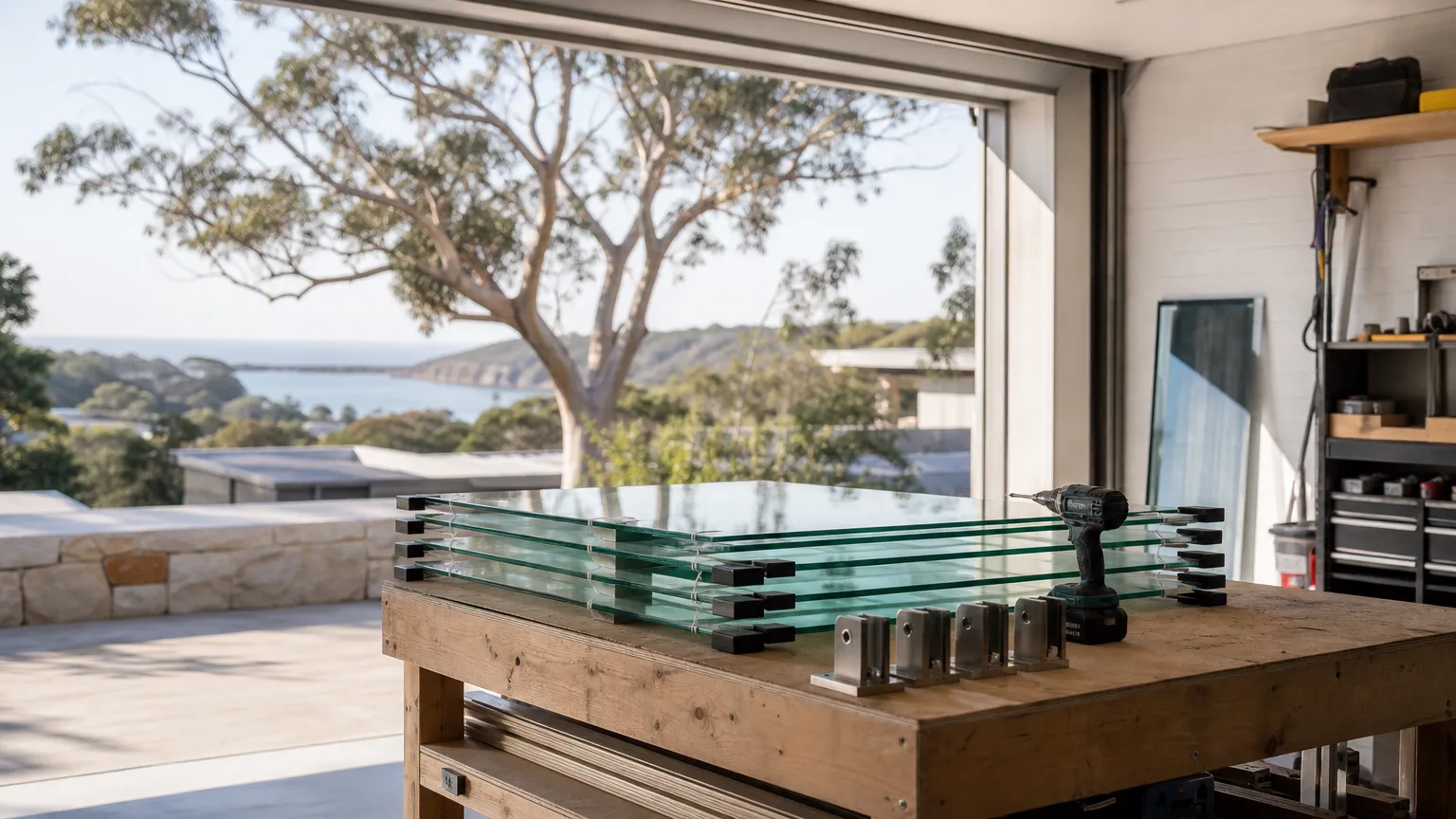
A DIY glass kit is another way to bring the cost of glass down. Glassfit Australia (glassfit.com.au, checked October 2026) advertises kits from $205 a metre pin-fixed and $225 a metre face-fixed, supply only, though you do the installation and the fence still has to pass.
Whichever you choose, confirm the requirements for your site with your council or a certifier, then send the details through the free quote form.