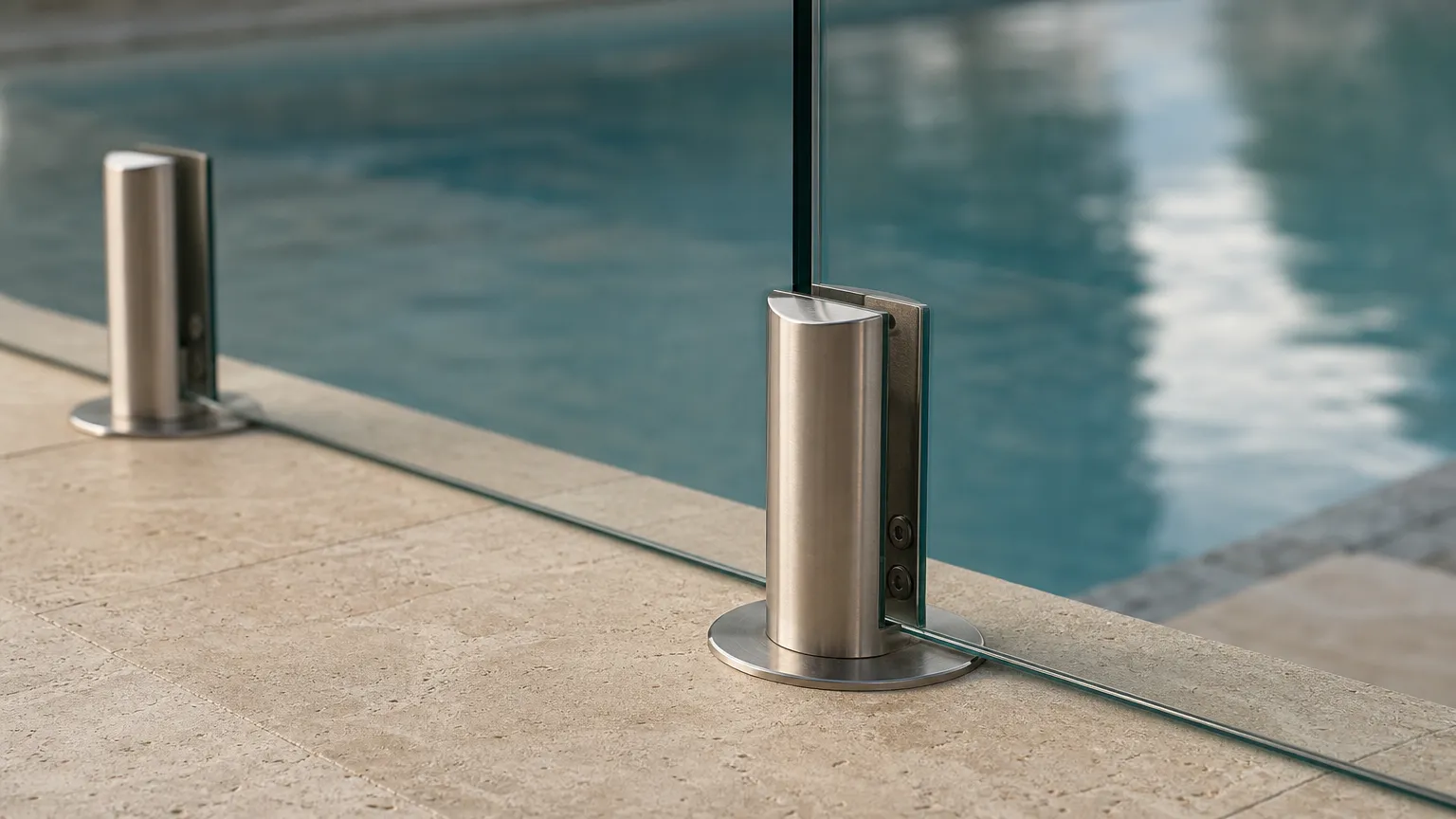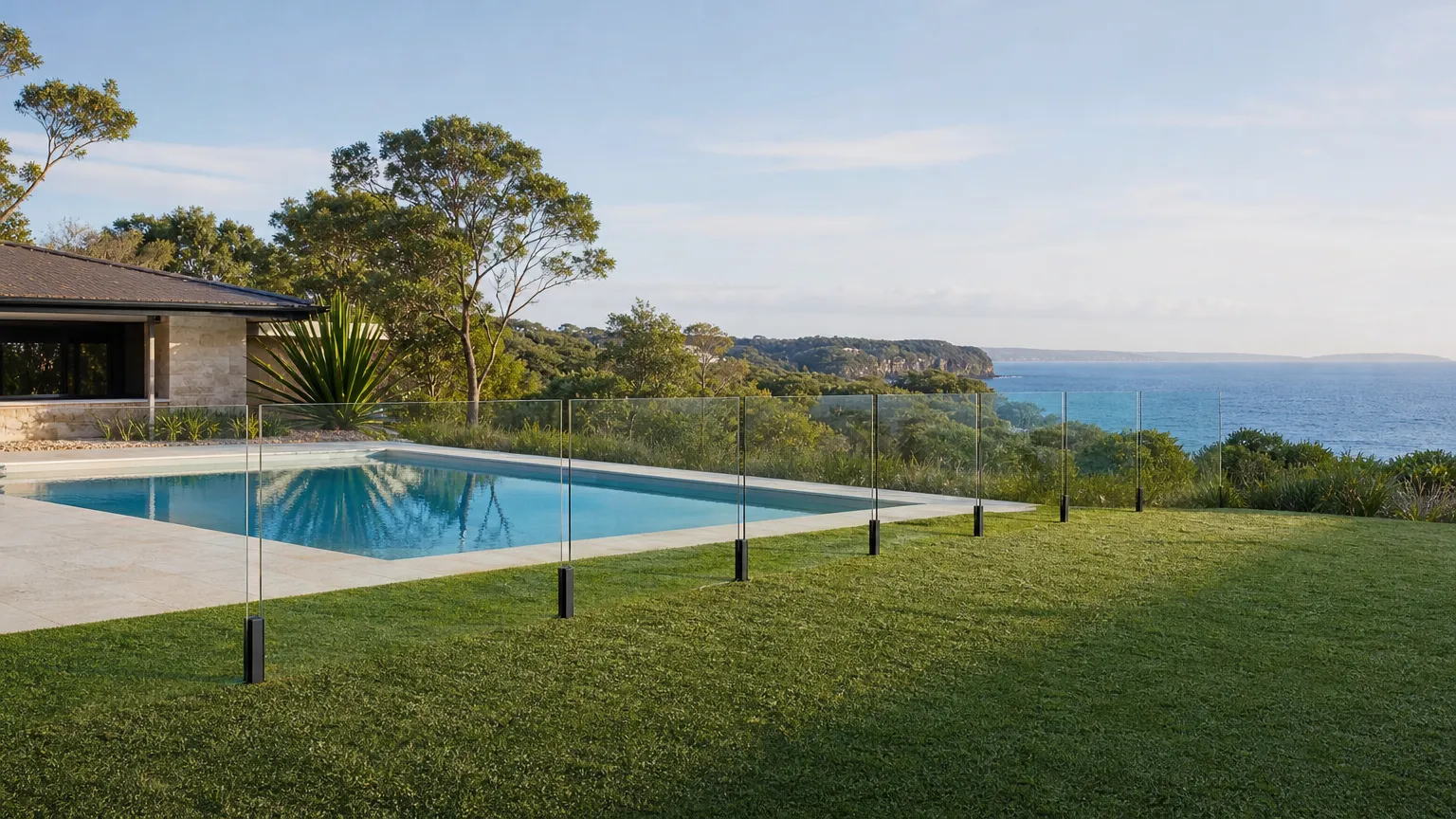
Close to the beach and Port Hacking, a pool fence gets salt on it most days of the year. Glass shrugs that off. The steel holding it up is another matter, and that decides more about how a Cronulla fence ages than anything else on the quote.
Pick the steel first
Lower grades of stainless look fine on the day they go in. Within reach of the surf they start to show brown tea-staining around the spigots and hinge pins, and once the latch corrodes the gate stops closing properly. That’s a compliance problem as well as a looks problem, because the gate has to shut and latch on its own.
So the first question we ask is how far the pool is from the water and which way the yard faces. Close in, we fit marine-grade or duplex stainless, or powder-coated aluminium spigots. A rinse with the hose after a windy week keeps the finish clean. It’s a quick job, and it does more for the fence than anything else you can do.
Courtyards and tight side access
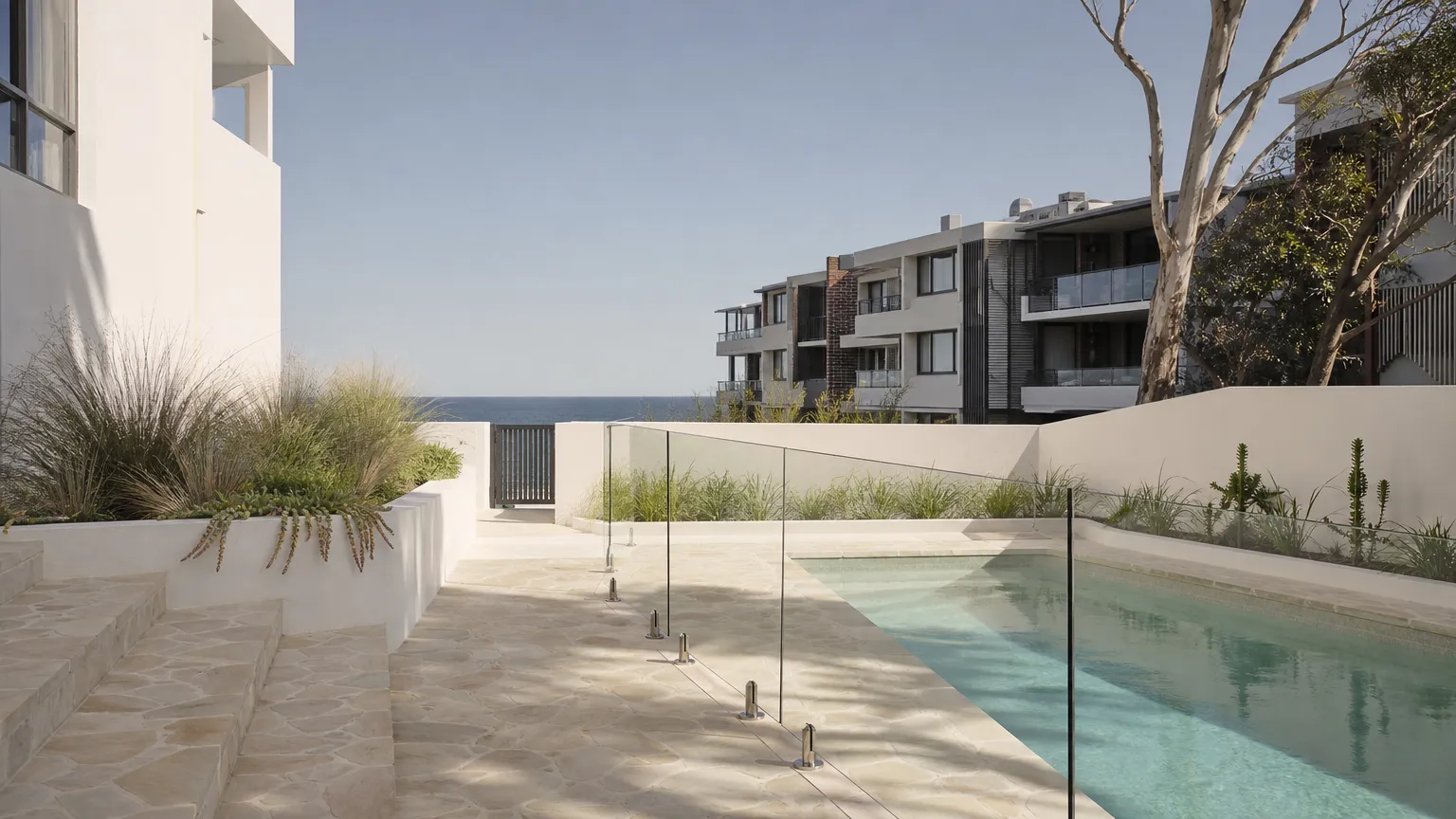
A lot of Shire pools are squeezed into a courtyard between the house and the back fence, with a deck or an entertaining area right beside the water. That changes the job in a few ways.
The fence line has less room to move, so the 900 mm zone outside it fills up fast. A barbecue, a bench seat or a stack of pots against the glass gives a child a step up. It’s easier to plan where those things will live before the spigots go in than to shift them after an inspection.
Getting 12 mm toughened panels down a narrow side passage takes more hands and more time, and that shows up in the labour. Where a boundary fence forms part of the barrier, that section needs to be 1800 mm high, which often means replacing or extending the back fence at the same time.
Sand under the fixings
Spigots need something solid to hold. On a paved courtyard with a sound slab, they’re core-drilled in. Where the pool edge runs onto a lawn or a garden bed over sand, we pour footings first, or switch that stretch to semi-frameless posts set in concrete. Mixing the two on one fence is common and looks fine.
Balconies above the pool
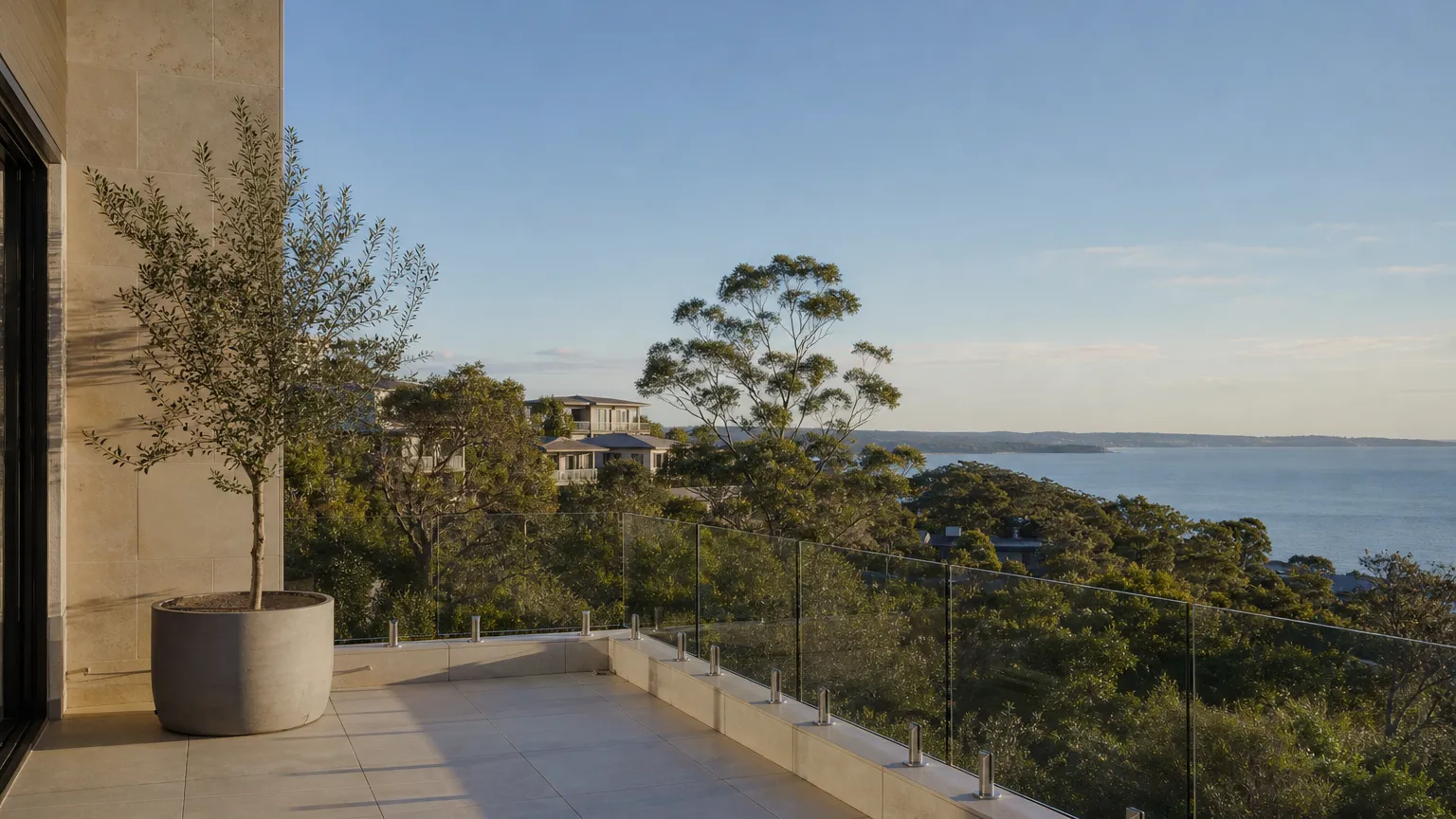
If there’s a balcony or deck above the yard, it may want glass too. A balcony balustrade follows the NCC rather than the pool rules, with its own height and gap limits, so it’s quoted as a separate barrier even when the glass matches.
Council and certificates
Sutherland Shire Council runs a pool barrier inspection program and will inspect on request for a certificate of compliance. A new or replaced fence has to meet AS 1926.1-2012.
NSW pool barrier
- Minimum height
- 1200 mm from finished ground level
- Gap under the barrier
- 100 mm or less
- Gaps between uprights
- 100 mm or less
- Non-climbable zone
- 900 mm arc outside, plus 300 mm inside
- Boundary fence as barrier
- 1800 mm high
- Gate
- Self-closing, self-latching, opens away from the pool
- Standard
- AS 1926.1-2012 for pools built after 1 May 2013 and any modified barrier
Source · NSW Government, Pool owner obligations
Gates, the full non-climbable zone and the rules for older pools are covered on the main glass pool fencing page.