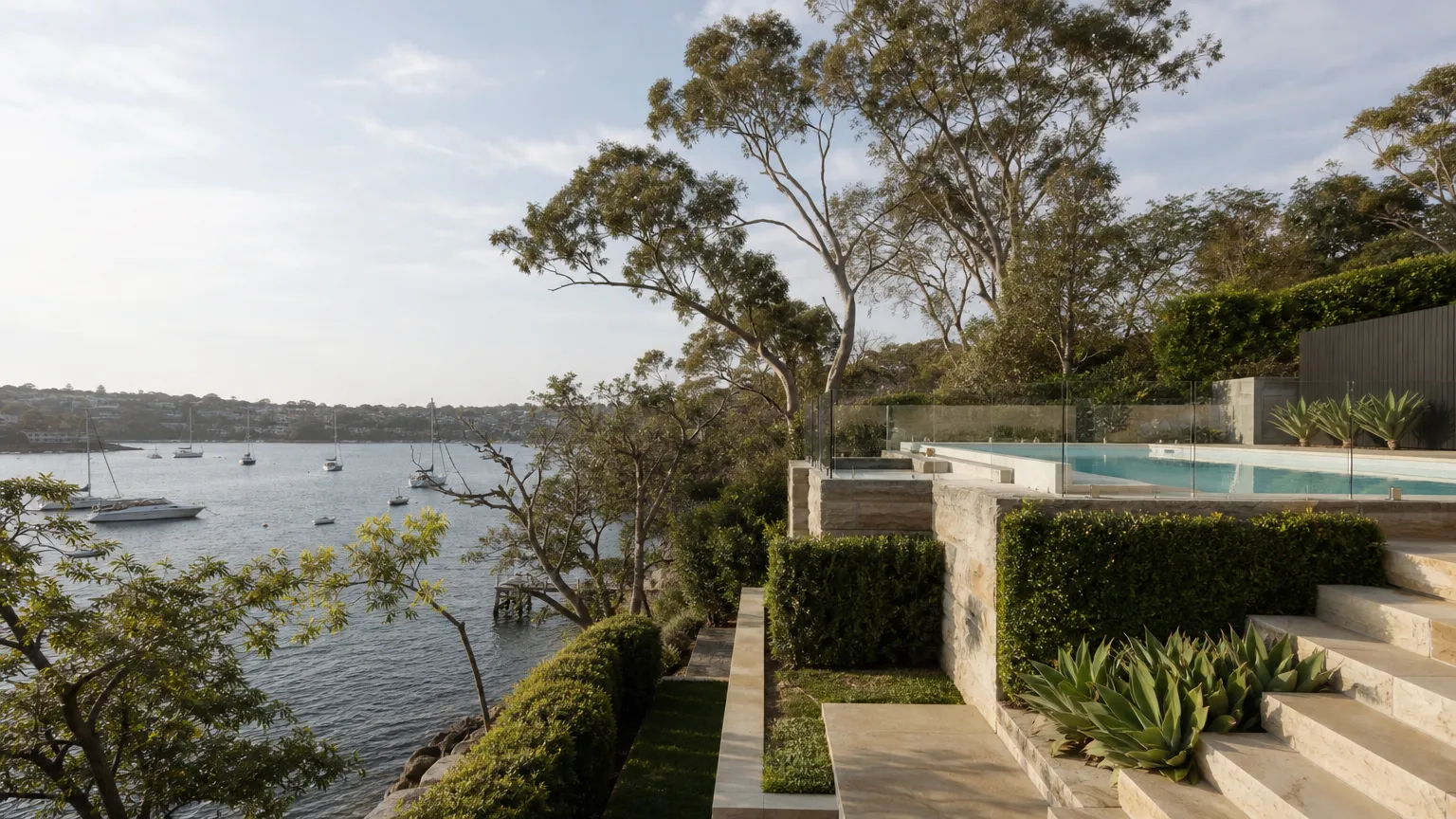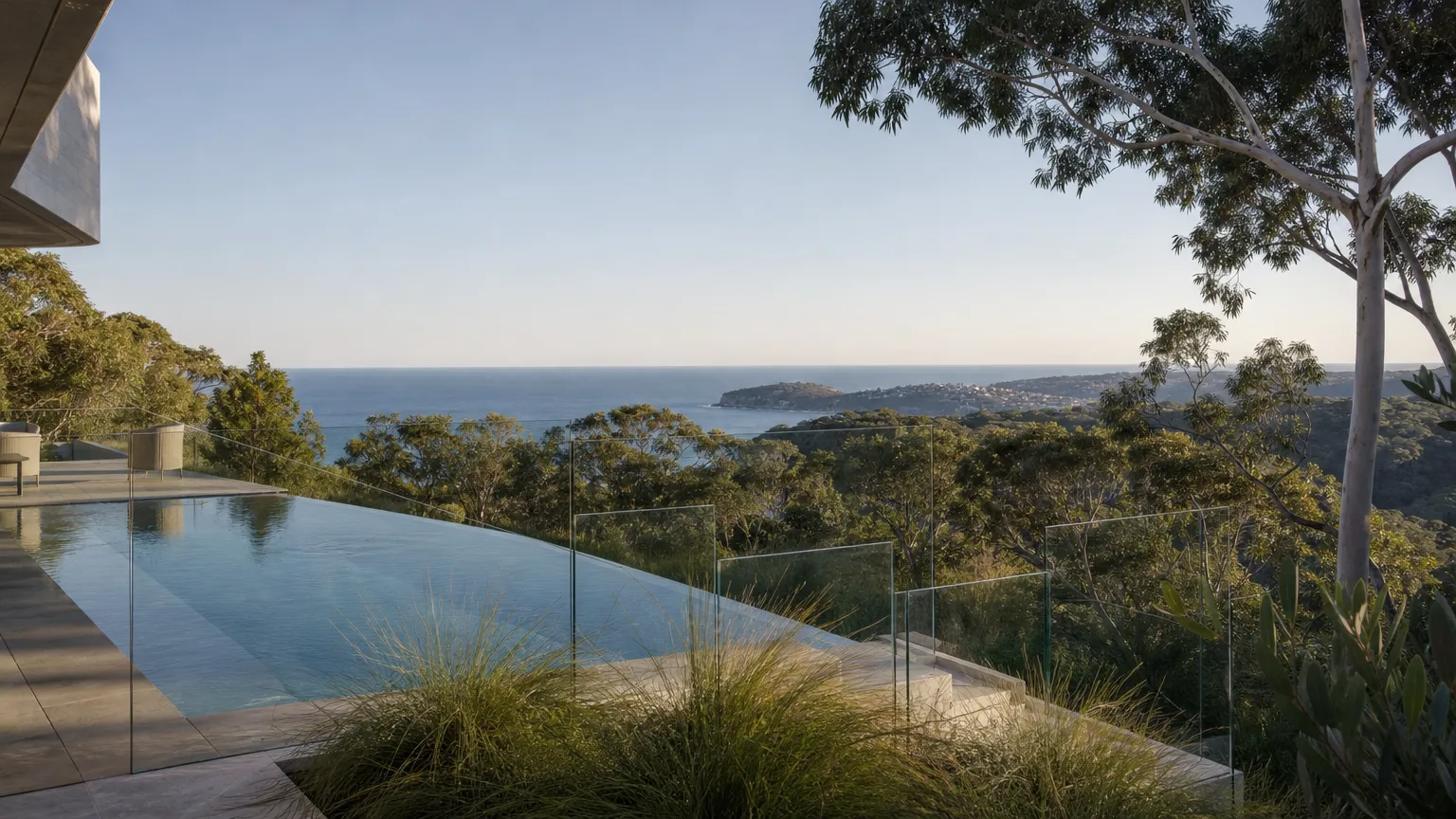
Picture a typical pool from Manly up to Palm Beach and it’s dug into the side of a hill. There’s a retaining wall on the uphill side, a drop on the downhill side, and stairs between the house and the water. The fence has to work around all three.
Where the gate goes
On a flat block you put the gate wherever the path is. On a hillside the gate has to sit somewhere level enough to swing freely, and it has to open away from the pool. That rules out a lot of spots. A gate hung across a step, or at the bottom of a stair, tends to bind or drift and stop latching, and a gate that doesn’t latch every time fails the whole fence.
So we usually start the set-out from the gate. Find the landing where it can swing cleanly, then run the panels out from there in both directions, stepping them down as the ground drops.
Retaining walls and the uphill side
The 900 mm non-climbable zone is measured on the outside of the fence. On a slope, the uphill side is where it gets tricky. A retaining wall, a garden bed built up behind it, or a stair handrail near the glass can all give a child the height they need to get over. Sometimes the fix is to move the fence line. Sometimes it’s raising the glass on that stretch, or making the retaining wall itself part of the barrier.
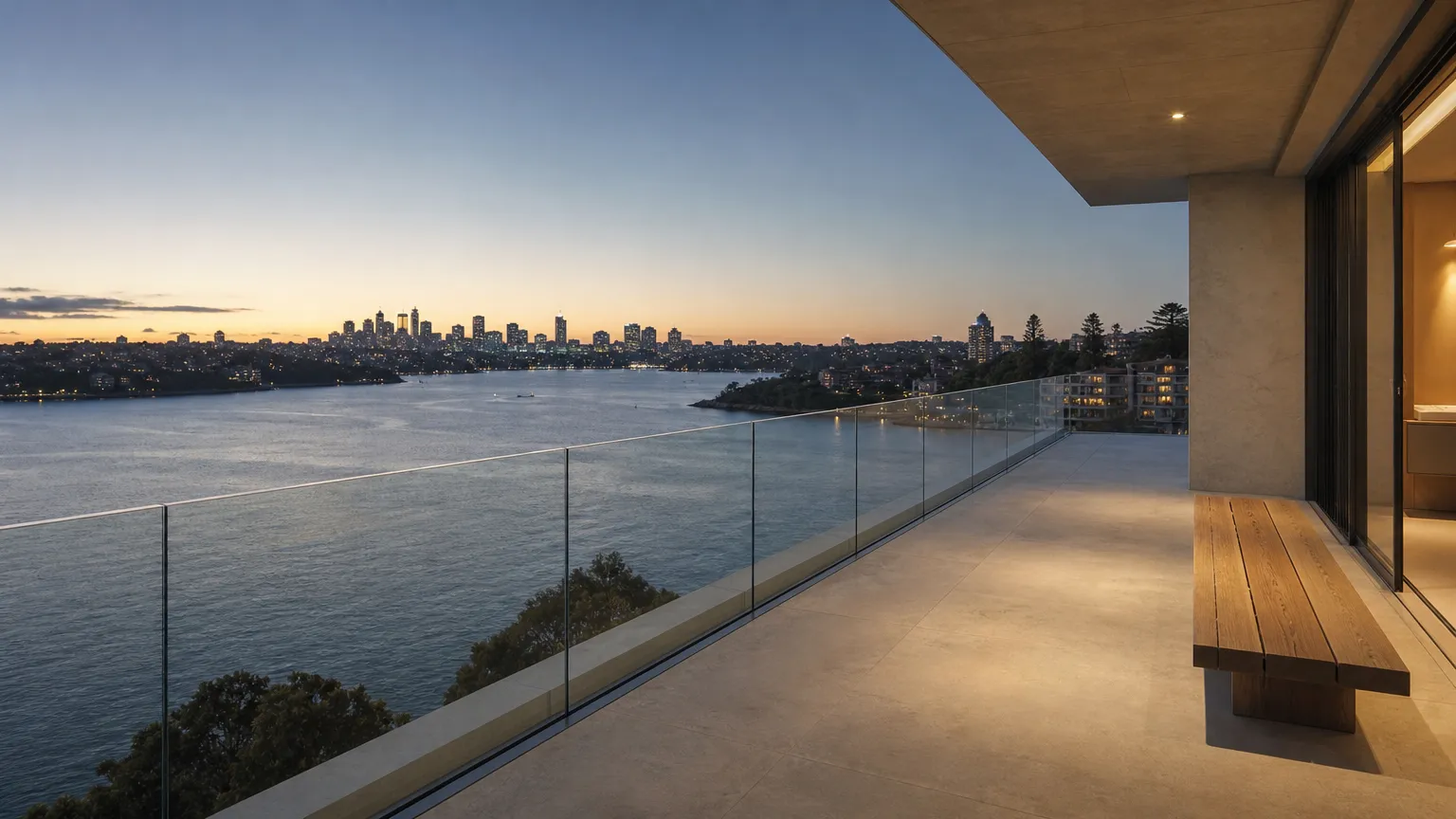
On the downhill side, if the pool edge is well above the garden below, the fence may also be guarding a fall. Where that drop is 1 m or more, the balustrade rules come into it as well. We check both before the glass is ordered.
Wind and salt
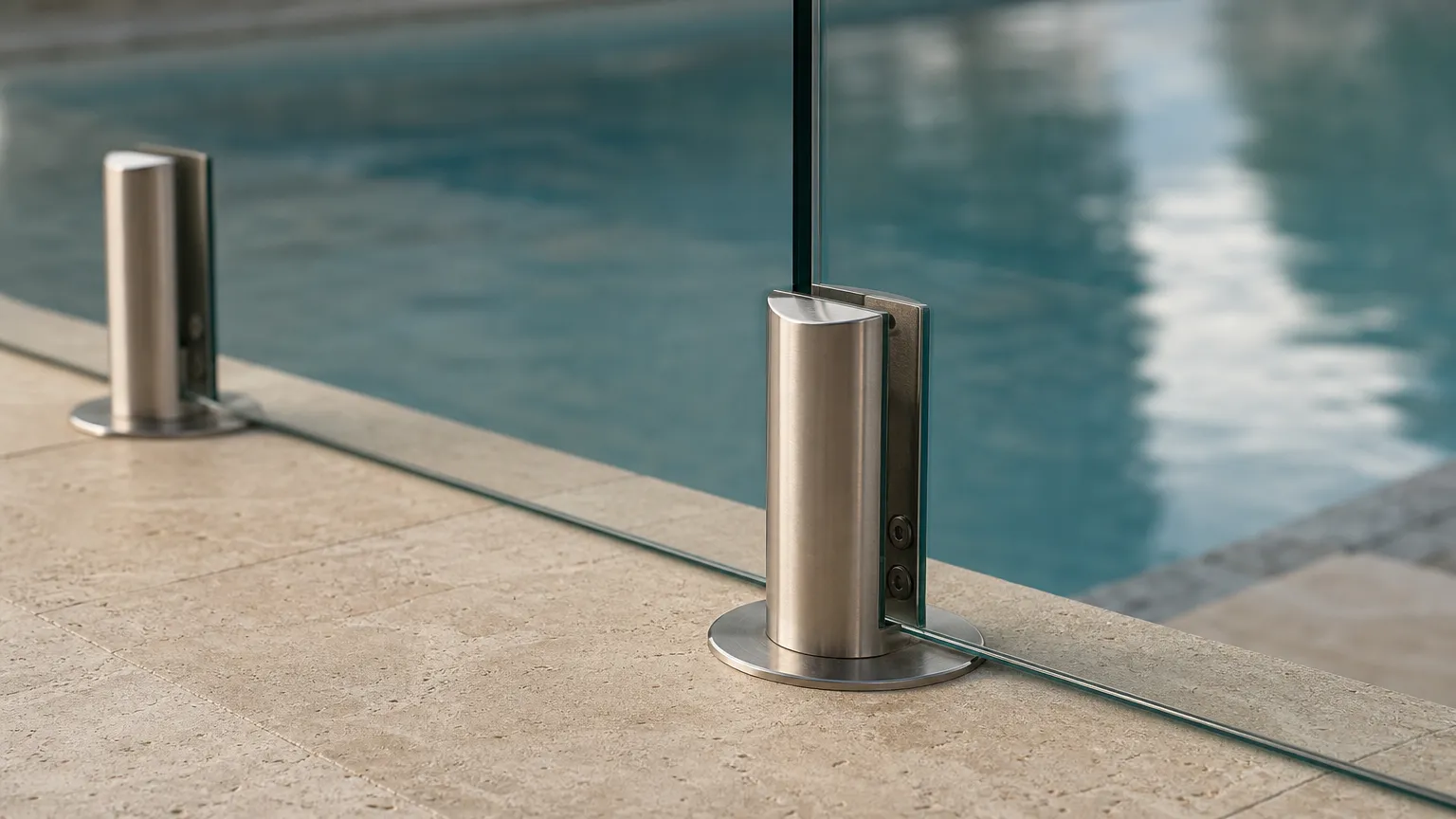
Beachfront and headland suburbs from Freshwater to Avalon take the full force of onshore wind. The glass handles it. Cheaper stainless doesn’t, and rust spots on spigots and hinge pins show up quickly. Marine-grade or duplex stainless, or powder-coated aluminium, is the right call this close to the ocean. Rinse it with fresh water now and then and it stays clean.
Bush blocks
Plenty of Northern Beaches homes back onto bushland. If your block is mapped as bushfire prone land, mention it when you ask for a quote, so it’s part of the conversation from the start. Overhanging branches inside the 900 mm zone are a separate problem, and they need to be cut back.
Council
Northern Beaches Council proactively inspects backyard pools for safety compliance, and if a pool fails, it tells the owner what work is needed. A new or replaced barrier has to meet AS 1926.1-2012, even on an older pool.
NSW pool barrier
- Minimum height
- 1200 mm from finished ground level
- Gap under the barrier
- 100 mm or less
- Gaps between uprights
- 100 mm or less
- Non-climbable zone
- 900 mm arc outside, plus 300 mm inside
- Boundary fence as barrier
- 1800 mm high
- Gate
- Self-closing, self-latching, opens away from the pool
- Standard
- AS 1926.1-2012 for pools built after 1 May 2013 and any modified barrier
Source · NSW Government, Pool owner obligations
For gates, the non-climbable zone and the standards for older pools, see the main glass pool fencing page. If there’s a deck above the pool, our glass balustrades page covers the NCC side.