Every piece of custom glass starts with a measure. A splashback has to clear each power point and window reveal, and a shower screen has to fit walls that are rarely plumb. Toughened glass can’t be cut or drilled once it’s made, so those measurements are fixed before the glass is ordered, and a mistake means a new sheet.
Glass cut to size
- Splashbacks
- Back-painted toughened glass, factory cut-outs
- Shower screens
- Toughened safety glass, frameless or semi-frameless
- Mirrors
- Polished or bevelled edges, safety backing
- Panels
- Privacy, wind and internal screens, clear, frosted or tinted
- Safety
- Wet areas, doors and low panels need safety glass
Source · NCC glazing provisions, AS 1288
Why wet areas and doors need safety glass
The NCC glazing provisions, which reference AS 1288, require safety glass where people are likely to walk into it or slip against it. Bathrooms, doors and low panels near the floor are the usual places. In practice that means toughened glass, which breaks into small blunt pieces, or laminated glass, which holds together on its interlayer. Ordinary annealed glass breaks into long sharp shards, and it has no place in a shower. Safety glass carries a permanent mark, so you can check what you’ve got.
Kitchen splashbacks
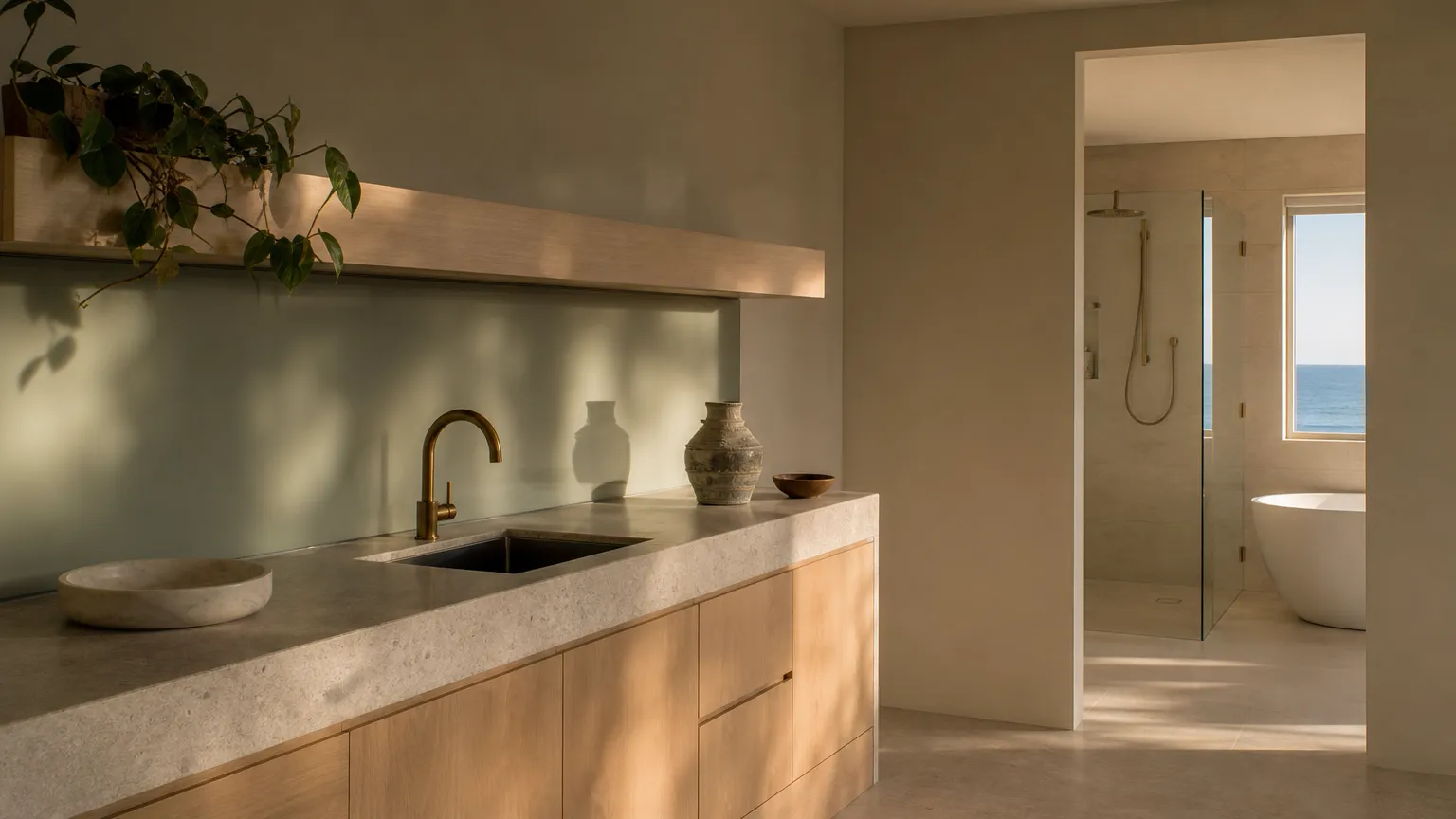
A glass splashback is a sheet of toughened glass painted on the back, then fixed to the wall with an adhesive that won’t attack the paint. The colour can be matched to a paint chip or a cabinet sample. Low-iron glass removes the green tint that normal glass gives, so pale colours and whites come out true.
A run behind a bench can often be one sheet, or a few large ones with tight joins. Cut-outs for power points are made before the glass is toughened, which is why we template the wall first and need the cabinetry, benchtop and power points in place before we measure.
Shower screens
Frameless screens use heavier toughened glass held by hinges fixed to the wall or to the next panel, with seals along the edges to keep the water in. Semi-frameless screens put a slim aluminium frame around the fixed panels and usually cost less. A screen with no hob relies on the floor falling to the waste, so the tiler’s falls need to be right before the glass goes in.
Both types are measured after the tiling is finished, because tile thickness and slightly out-of-plumb walls change the panel sizes.
Mirrors
A mirror can be as simple as one panel over a vanity or as large as a full wall in a home gym or a run of wardrobe doors. Edges are polished or bevelled. A safety backing film holds the glass together if it breaks, which matters on doors and anywhere at body height.
Booking a measure
Use the quote form with the room, the product and rough sizes. Photos help, and we’ll ask for them when we get back to you. Splashbacks with cut-outs and shower screens always need a site measure. A plain mirror can sometimes be priced from your own measurements.