The worry people raise first is the glass breaking. It’s a fair thing to ask about a fence made of glass, around a place where children run barefoot, and the answer starts with how pool fence glass is made.
How toughened glass breaks
Pool fence panels are toughened safety glass. The glass is heated and then cooled quickly, which leaves the surface in compression and makes the panel much stronger than ordinary glass of the same thickness. When a toughened panel does break, it goes all at once into small, blunt pieces rather than long, sharp shards. That behaviour is what makes it a safety glass.
Each panel carries a permanent safety mark. If you can’t find one on a fence that came with the house, ask a glazier or a certifier to confirm what the glass is. Thickness is set by the system design. 12 mm toughened is the common Australian frameless spec, but there’s no single legal minimum, so the right figure is whatever the engineered system calls for.
The one weakness of toughened glass is its edges. A hard knock on an edge, from a whipper snipper, a dropped paver or a gate swung into a post, can chip it, and a chipped toughened panel can fail later without any further impact. A chip isn’t something to watch. Get it looked at.
The fixing matters as much as the glass
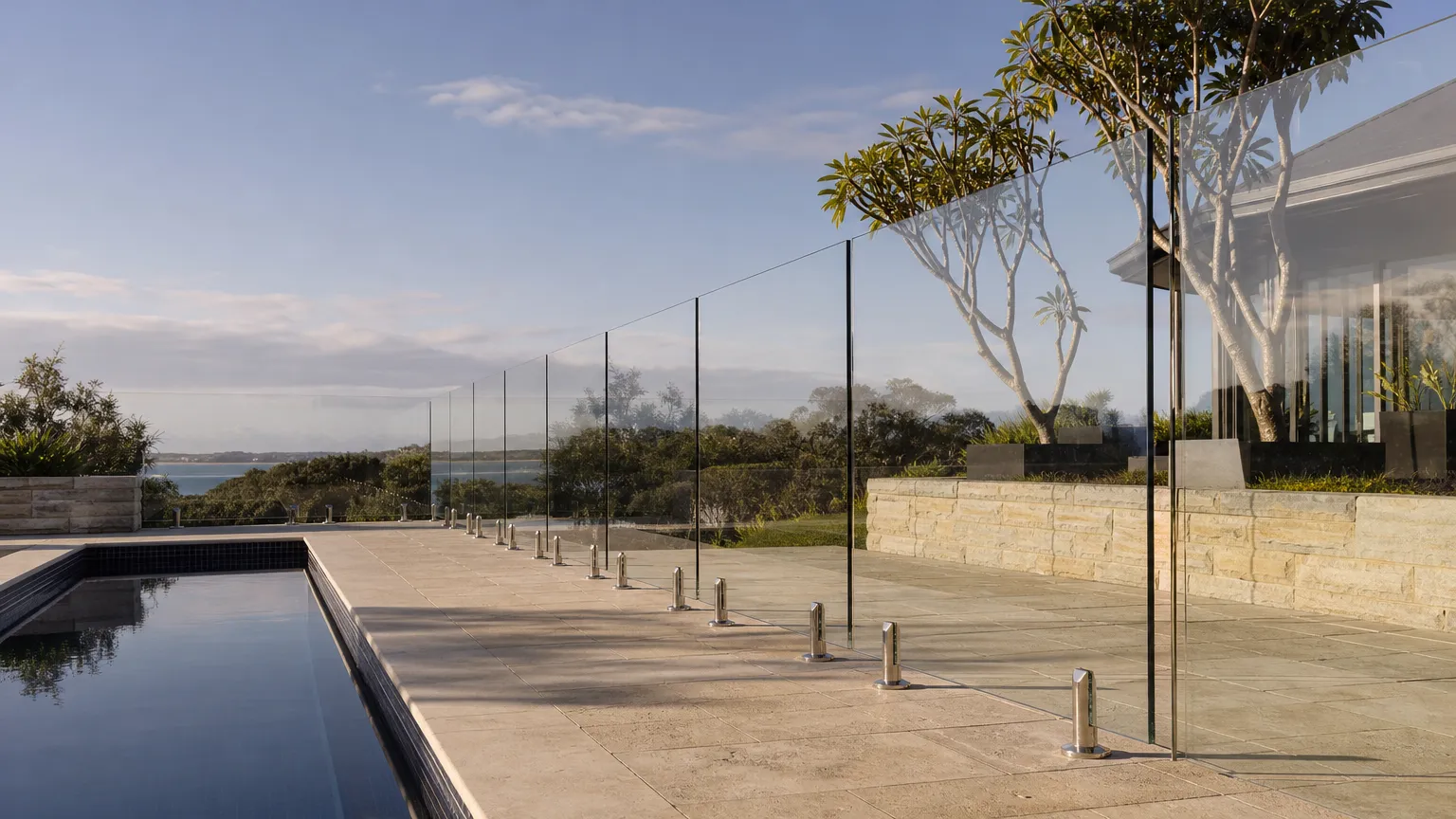
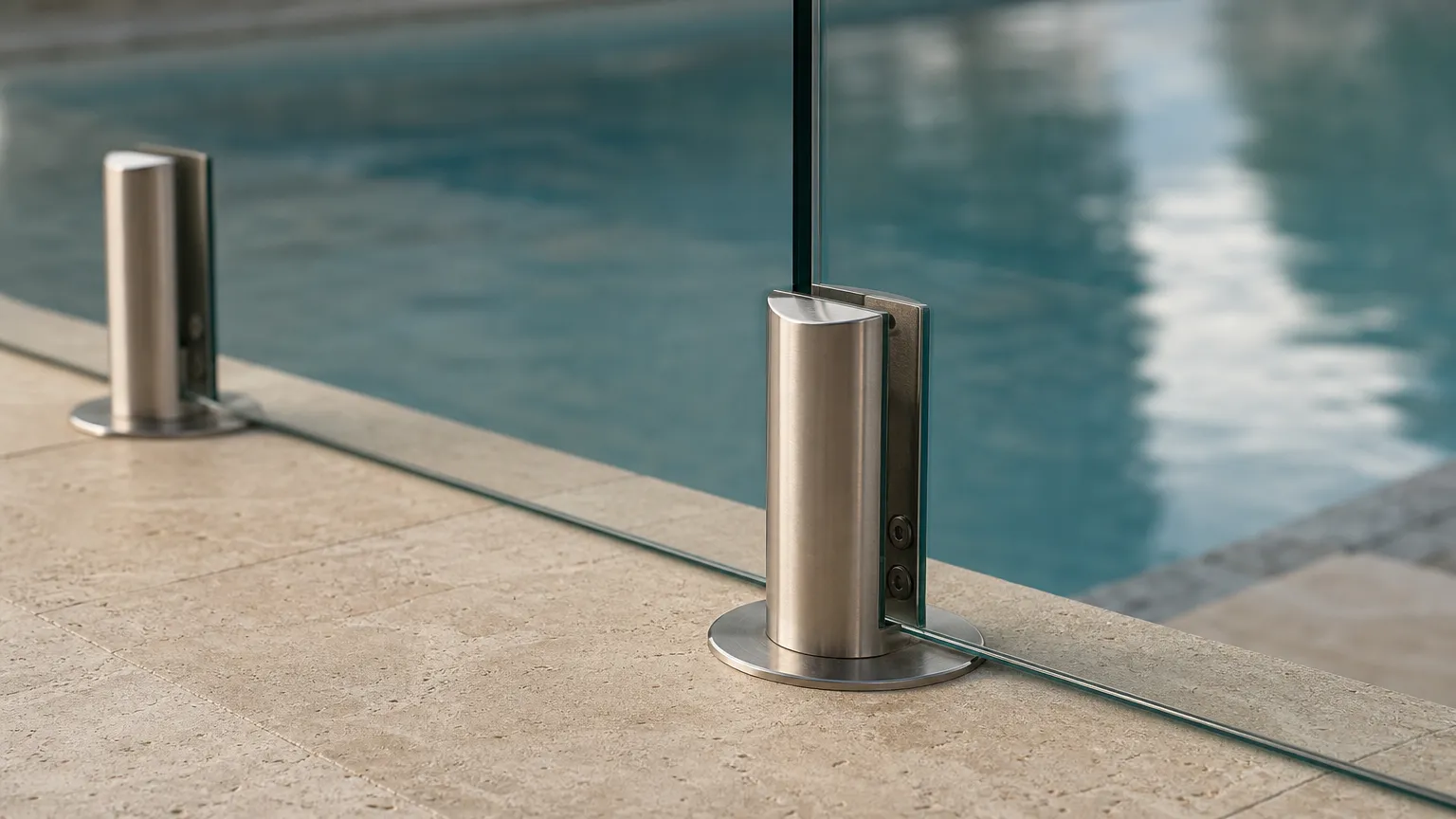
A panel is only as safe as what holds it. Core-drilled spigots, bolted base plates, channels and posts all do the job when they’re installed into sound ground and kept tight. Problems start when the ground moves, the bolts on a base plate loosen, or a fitting corrodes near salt water. A panel that rocks when you push it near the top has a fixing problem, and left alone that can turn into a glass problem.
Climbing
This is where glass has a clear advantage. A frameless panel is a flat, smooth sheet with no rails to stand on and no bars to grip. The NSW barrier rules exist mainly to stop a small child getting over, and glass gives them very little to work with.
NSW pool barrier
- Minimum height
- 1200 mm from finished ground level
- Gap under the barrier
- 100 mm or less
- Gaps between uprights
- 100 mm or less
- Non-climbable zone
- 900 mm arc outside, plus 300 mm inside
- Boundary fence as barrier
- 1800 mm high
- Gate
- Self-closing, self-latching, opens away from the pool
- Standard
- AS 1926.1-2012 for pools built after 1 May 2013 and any modified barrier
Source · NSW Government, Pool owner obligations
Other fence types can be just as compliant. An aluminium tubular fence passes when its vertical bars are no more than 100 mm apart and any horizontal climbable rails are at least 900 mm apart. The difference is that glass doesn’t rely on anyone getting those spacings right.
What glass can’t control is what’s next to it. A child doesn’t need to climb the panel if there’s a pot plant, a pump cover, a chair or a low wall within the 900 mm non-climbable zone outside it. Ground built up since the fence went in also eats into the height, and the barrier has to stand at least 1200 mm above the finished ground. These are the things to watch, more than the glass.
The gate is the part that moves
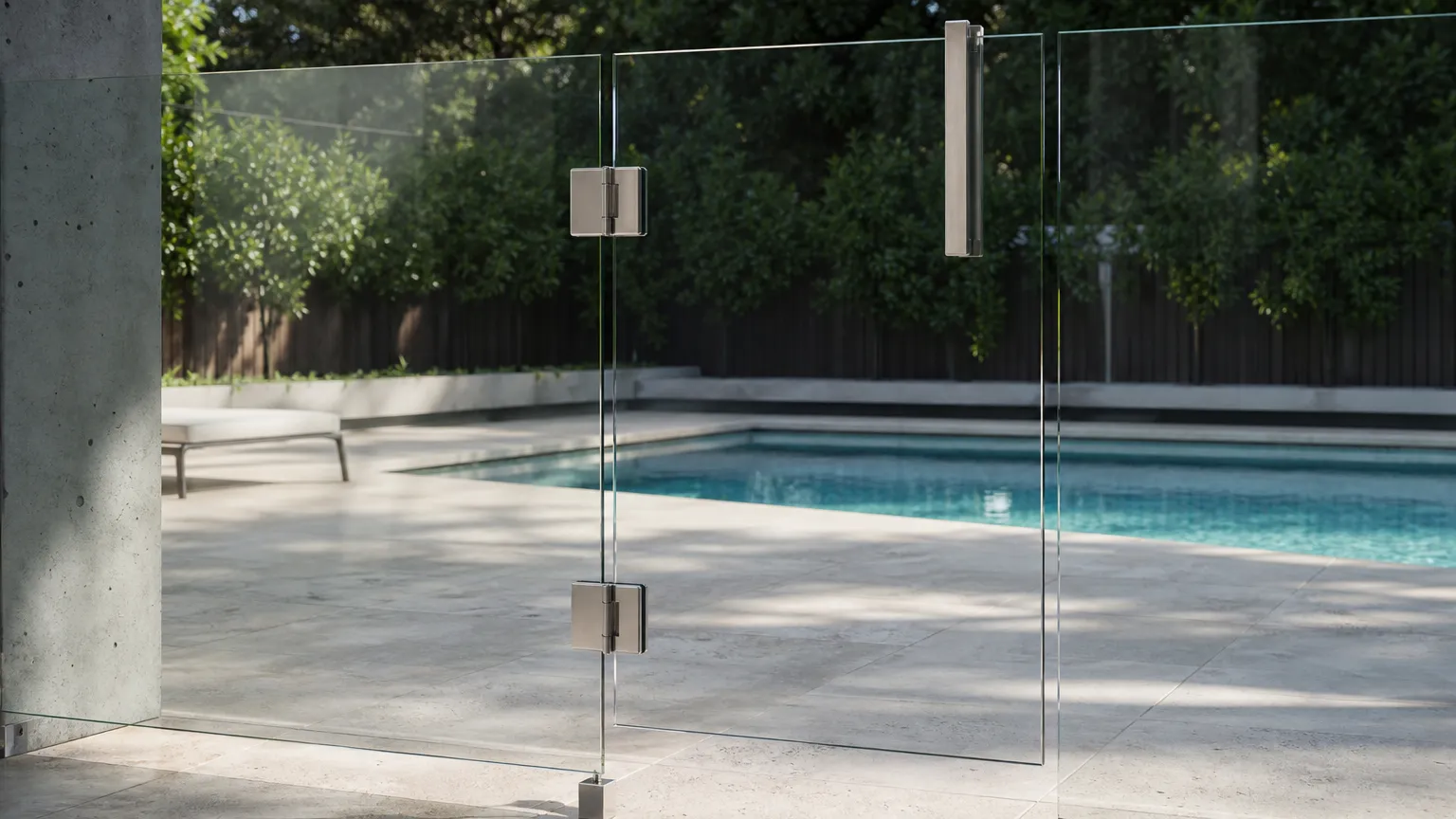
A pool gate must be self-closing and self-latching, and it must open away from the pool. Every other part of the fence just stands there. The gate gets opened over and over on a summer day, shouldered by people carrying things, and now and then propped open with a towel or a bag. Hinges lose tension and latches drift out of line.
Glass gates are heavier than aluminium ones, which puts more load on the hinges. Test the gate regularly by opening it fully and letting go. It should shut and latch without help. Latch height and shielding are set by AS 1926.1, so replacement parts should be pool-rated hardware, and your installer can confirm the right type. The summer safety checklist has the full walk-around.
What a fence can’t do
A compliant fence slows a child down and keeps them out of the pool area while the gate is shut. It isn’t supervision. Clear glass makes watching easier, because you can see the water from the house, but it also makes the pool look inviting from the other side. Children should know the gate rules, and the gate should never be propped open.
NSW requires a CPR sign near the pool, readable from 3 m away, with updated sign rules from 1 September 2019. The sign is there for the moment everything else has failed, and an adult who knows CPR matters more than the sign does.
The paperwork is part of the system too. Every pool must be on the NSW Swimming Pool Register, but registering doesn’t mean the pool complies. A compliance inspection by your council or an accredited private certifier answers that, and a certificate of compliance lasts 3 years.
When to treat the fence as unsafe
Treat the barrier as not working, and keep children out of the pool area, if a panel is cracked or broken, a panel or post moves when pushed, the gate doesn’t latch by itself, or the gate has been removed or damaged. If a panel breaks, keep people and pets away from the pieces, block the gap with something solid until it’s repaired, and call a glazier.
A replacement panel has to be toughened to size, which takes time, so a solid temporary barrier across the gap is the sensible stopgap until it arrives.
Frameless or semi-frameless
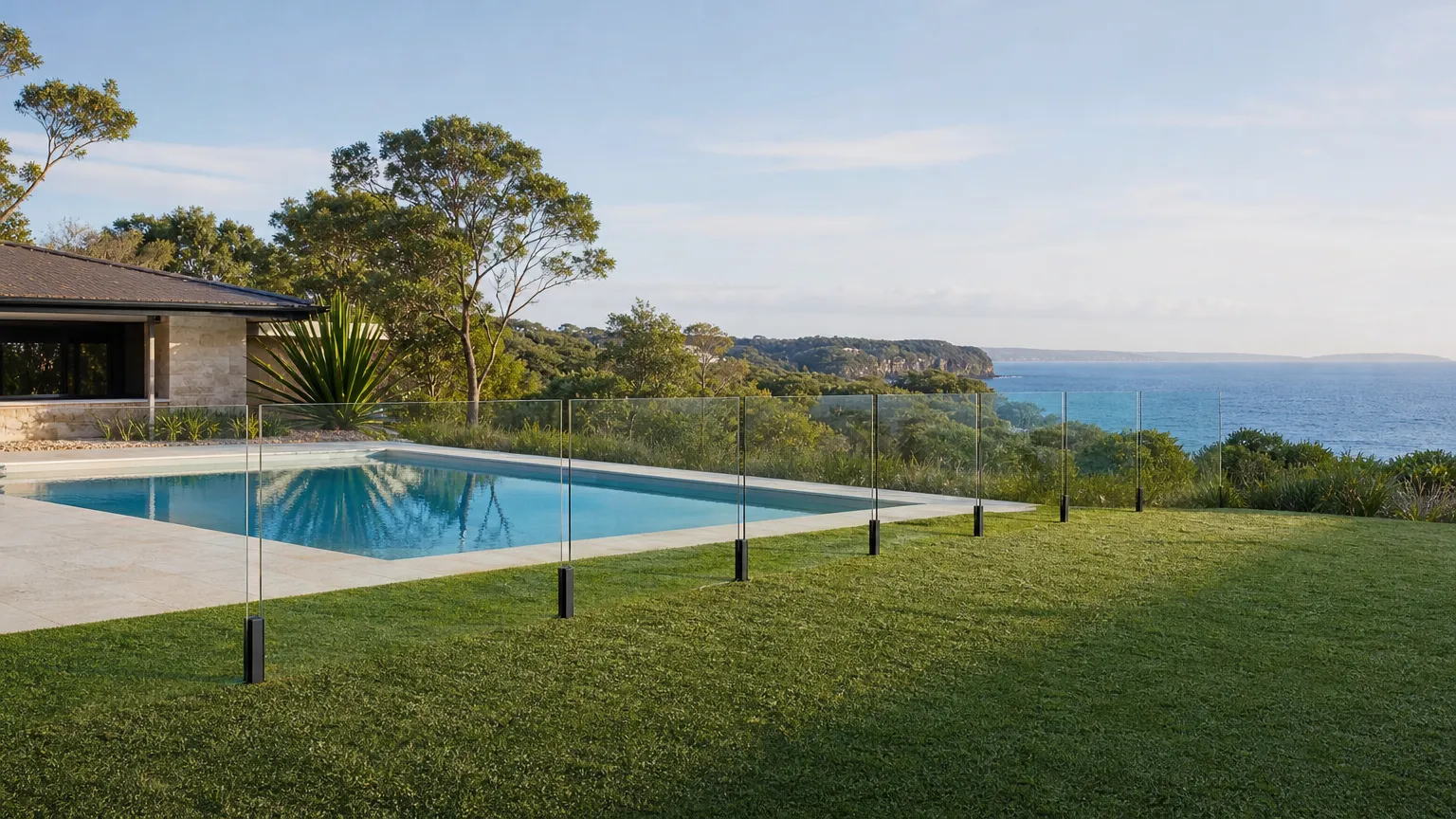
Both are safe when they’re built and maintained to the rules. Frameless gives the clearest view of the water. Semi-frameless adds slim posts, which some owners prefer on lawn or sloping ground. Confirm the requirements for your site with your council or a certifier, and when you’re ready, send the details through the free quote form.